

Posts Tagged
Soviet Union
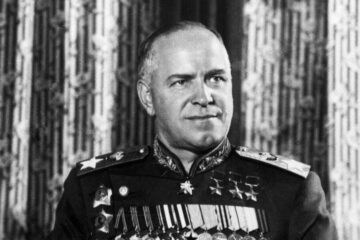
Russia: the Bloody Insanity of “We Can Repeat” — part 2

Soviet Field Marshal Zhukov, who once said of sending large numbers of his own troops to certain death, “Why spare them? Russian women will give birth to yet more.” by Wolf Stoner
National Vanguard Russian correspondent
read part 1 HAVING LEARNED ABOUT Soviet methods of warfare, one can’t…
National Vanguard Russian correspondent
read part 1 HAVING LEARNED ABOUT Soviet methods of warfare, one can’t…

Russia: the Bloody Insanity of “We Can Repeat” — part 1
You say that a good cause will even sanctify war! I tell you, it is the good war that sanctifies every cause!
– Nietzsche by Wolf Stoner
National Vanguard Russian correspondent
read part 2 HUMAN NATURE presupposes conflict. The phenomenon of life itself is impossible without conflict and constant realignment…
– Nietzsche by Wolf Stoner
National Vanguard Russian correspondent
read part 2 HUMAN NATURE presupposes conflict. The phenomenon of life itself is impossible without conflict and constant realignment…
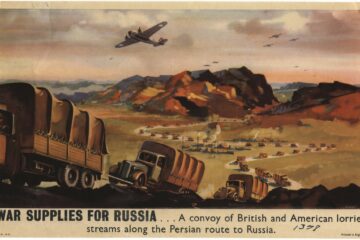
Red America
by Douglas Mercer SCOTT MCMEEKIN’S BOOK Stalin’s War (2021) is eye-opening and stomach-churning. It reveals in fine detail and straightforward prose that everything you heard about the communist subversion of America is not only absolutely true but is even much worse than you’ve…

An Interview with Sergei Khrushchev

Gordon Bakken and Sergei Khrushchev by Gordon Bakken I MET SERGEI Khrushchev (son of Nikita Khrushchev, leader of the Soviet Union from 1953 to 1964) in March 2002 while on a cruise around South America. He was there as a lecturer, and I was on vacation with an old friend from high school. I looked for him…
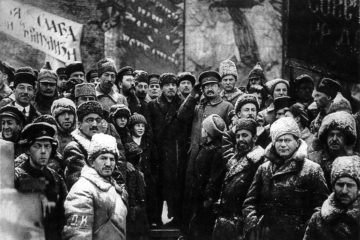
Newly Updated: The Jewish Role in the Bolshevik Revolution and Russia’s Early Soviet Regime, part 3

by Mark Weber Conclusion A STRIKING FEATURE of Mr. Wilton’s examination of the tumultuous 1917-1919 period in Russia is his frank treatment of the critically important Jewish role in establishing the Bolshevik regime. The following lists of persons in the Bolshevik Party and Soviet administration…

Newly Updated: The Jewish Role in the Bolshevik Revolution and Russia’s Early Soviet Regime, part 1

Tsar Nicholas, infant Olga, Tsaritsa Alexandra by Mark Weber IN THE NIGHT of July 16-17, 1918, a squad of Bolshevik secret police murdered Russia’s last emperor, Tsar Nicholas II, along with his wife, Tsaritsa Alexandra, their 14-year-old son, Tsarevich Alexis, and their four daughters.…
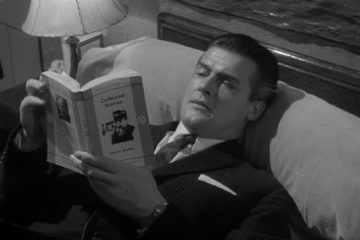
The Saint and Isaac Babel
Roger Moore as Simon Templar relaxing with a book. by Andrew Hamilton JEWS NEVER miss a trick, no matter how small, propagandizing and pestering the Gentiles. Recently I rewatched an old episode of the popular British television series The Saint (1962-1969) starring Roger Moore, the English actor…

Who Is Guilty?


by Revilo P. Oliver APROPOS of my comments in the May issue of Liberty Bell, p. 23, a reader sent me an account of the experiences of a close relative who was an officer in our Air Force and stationed in West Germany from 1973 to 1978. This man and his fellow officers had frequently to fly to West Berlin and thus…

Secrets of the Soviet Disease Warfare Program
Were biological weapons used against Germans at Stalingrad? by Mark Weber OF HUMANITY’S many noteworthy achievements and inventions, few are as evil and as horrifying as biological warfare: deliberate, government-ordered mass killing of people with lethal diseases. During the Second…


Stalin Burned Hundreds of Thousands of Russian Peasants’ Homes, But Everyone Blames Germany
Russians frequently cite this alleged war crime as Exhibit A of German brutality during the war. The peasants were subsistence farmers, barely scratching out a living. Burning their homes and barns almost ensured that they would perish over the harsh winter. Now it turns out Stalin’s Jewish…

